
Low mood and overwhelm

When school feels too heavy to face

Many students feel low or overwhelmed at times, especially during change, pressure, conflict, or after difficult experiences. This page is not here to diagnose, it is here to help you recognise patterns and explain how counselling in education can support a young person to feel safer, steadier, and more able to engage.

It can look like tiredness, shutdown, or “not bothered”

Low mood and overwhelm do not always look like sadness. Some students become withdrawn, quiet, irritable, tearful, perfectionistic, or emotionally flat. Others mask it at school then crash at home. In SEN and trauma informed contexts, overwhelm can show up as avoidance, aggression, sensory overload, or reduced communication rather than “talking about feelings”.
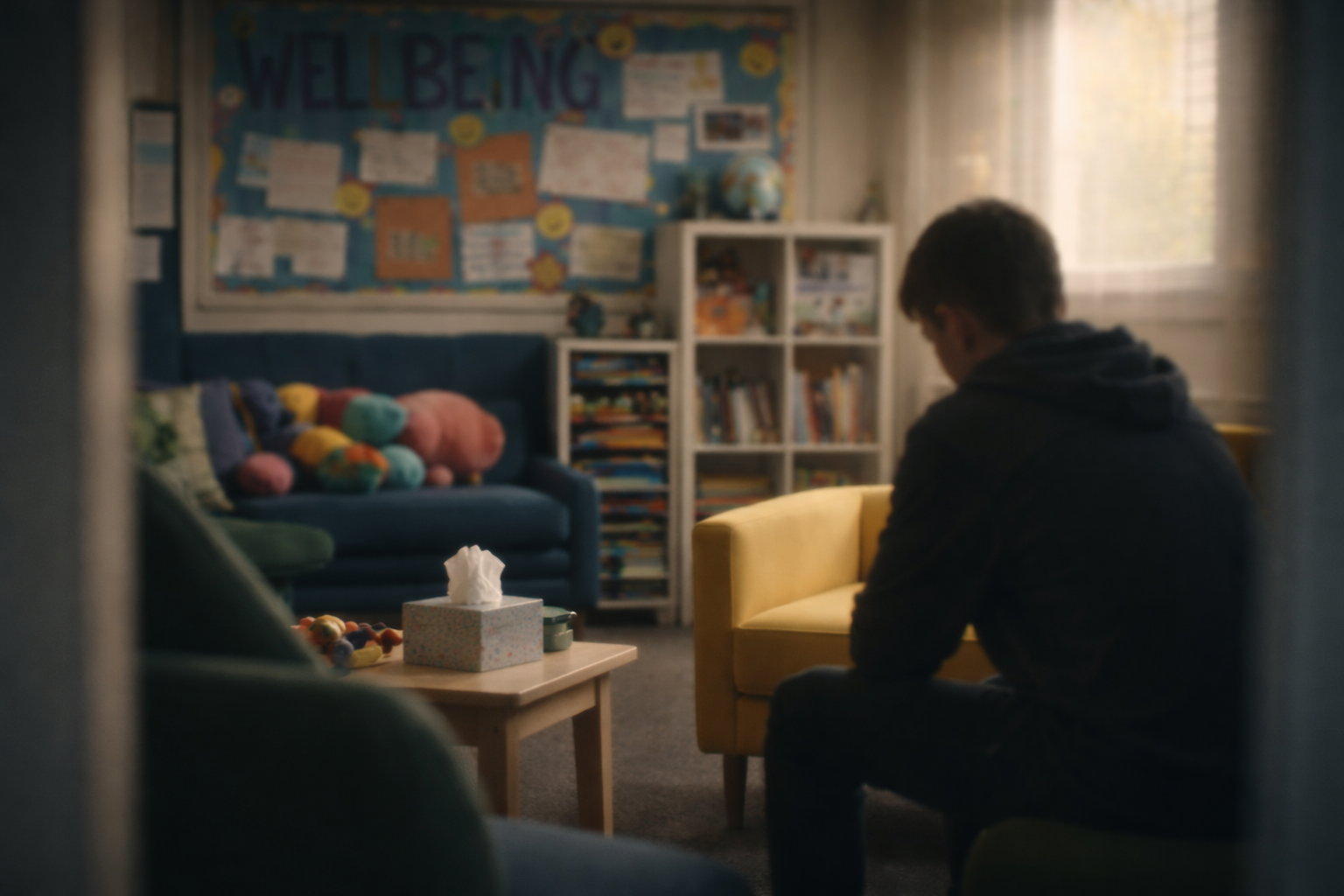
Student wellbeing support in education

How low mood and overwhelm can show up in school

These examples are common across mainstream, SEN, and alternative provision. They do not label a student, they simply help staff and families notice what may be going on beneath the surface.

Feelings and thoughts

Students may describe feeling low, worried, “switched off”, hopeless, or constantly overwhelmed. Some have racing thoughts, self criticism, or feel like they cannot cope with everyday demands. Others struggle to name feelings at all, and may present as blank, guarded, or detached.

Body and nervous system

Overwhelm often sits in the body. You might see fatigue, headaches, stomach aches, sleep problems, tearfulness, agitation, or frequent visits to medical or pastoral staff. In neurodiversity, sensory overload and burnout can reduce tolerance to noise, transitions, demand, or social contact.

Learning and behaviour

Low mood can reduce concentration, motivation, memory, and confidence. A student may stop attempting work, avoid certain lessons, withdraw from friendships, or appear “lazy” when they are actually in shutdown. Some students externalise stress through anger, defiance, refusal, or repeated low level incidents. Attendance may dip when school begins to feel unsafe, too demanding, or socially overwhelming, but the underlying driver may be mood, burnout, sensory stress, or unresolved experiences.

How counselling helps

School based counselling offers a consistent, confidential space where a student can slow down and make sense of what is happening. We work in a trauma informed way, supporting emotional regulation, safer coping strategies, and communication of needs. For SEN settings, support can be adapted using visual tools, scaling, grounding, and pacing that suits the student. Where needed, we can also help staff think about reasonable adjustments, relational safety, and a plan to re build engagement without increasing pressure.

Low mood and overwhelm

When school starts to feel too much

Some students feel low, flat, or emotionally overwhelmed, and it can affect learning, friendships, behaviour, and confidence. Counselling offers a calm space to talk things through, reduce pressure, and find steadier ways to cope.

It does not always look like sadness

Low mood can show up as tiredness, irritability, withdrawal, tearfulness, or feeling shut down. Overwhelm can look like freezing, snapping, avoiding lessons, struggling to start work, or finding small things feel huge. For some students, including many with SEN, it can be linked with sensory load, change, anxiety, or unmet needs.

A blurred silhouette in a calm school wellbeing space

How low mood and overwhelm can show up

These examples are not a diagnosis, they are here to help staff and students recognise patterns and decide what support might help.

Low mood and overwhelm can include tearfulness, irritability, low confidence, tiredness, poor sleep, or feeling numb. Students may look disengaged, say they do not care, or struggle to speak about how they feel.