
School anxiety and attendance

When getting to school feels too hard

Some students want to attend but feel unable to, anxiety can build into avoidance, distress, or shutdown. This is often called emotionally based school avoidance, counselling in school can help students feel safer, steadier, and more able to re engage with learning over time.

It is not simply “refusing”

Attendance difficulties can be linked to anxiety, panic symptoms, bullying, friendship breakdown, family change, grief, health worries, sensory overload, learning pressure, or trauma. For some students, especially in SEN settings, it can show up as fight, flight, freeze, or shutdown, rather than clear words.
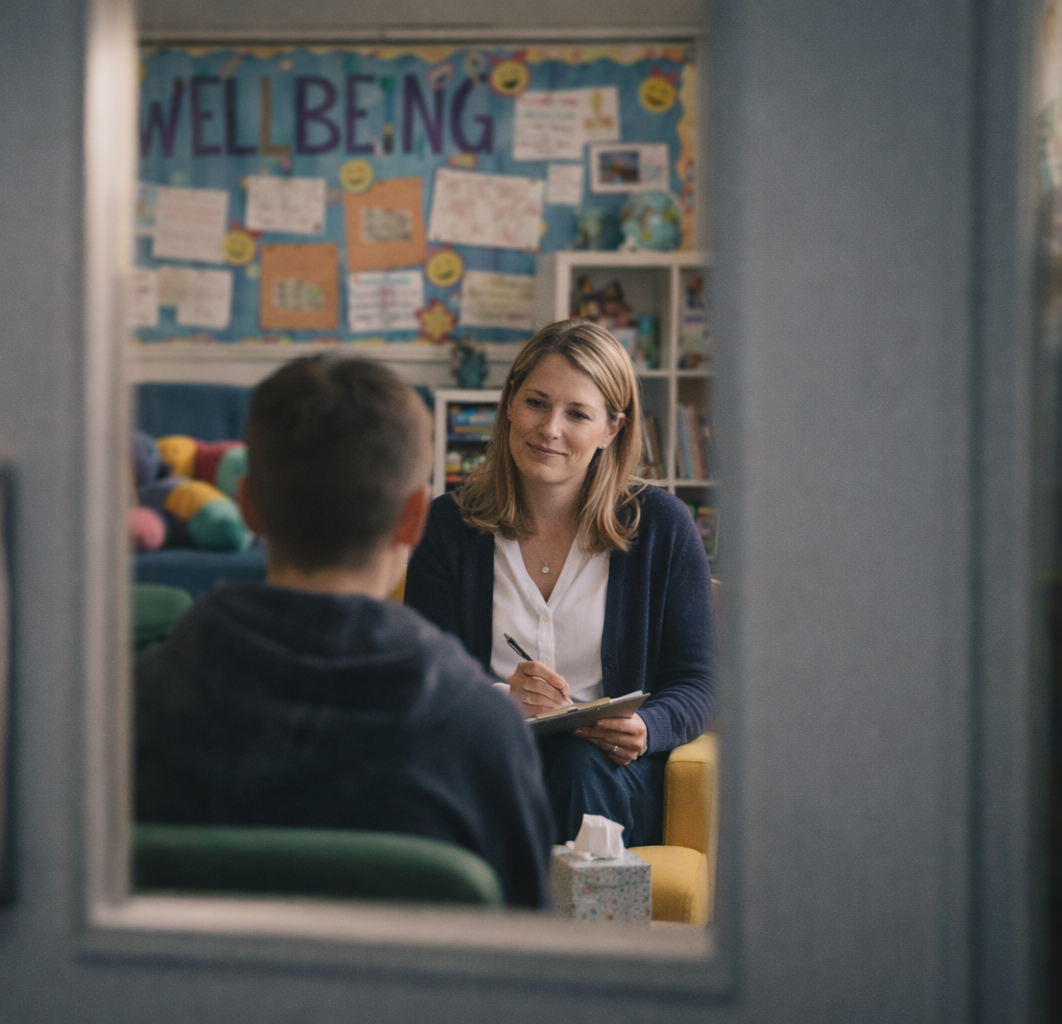
School anxiety and attendance support

What schools often see

These examples are not a diagnosis. They help staff recognise patterns, reduce blame, and put the right support in place.

How it can present

Frequent lateness or absences, tearfulness, anger, stomach aches or headaches before school, refusal at the gate, escalating morning routines, or appearing “fine” at home but distressed in school. Some students mask in class, then crash later, others avoid lessons, corridors, the canteen, or specific staff or peers.

Common drivers

Anxiety about separation, social situations, performance, sensory demands, unpredictable change, safety, or previous incidents. Attendance can also be affected by bullying, caring responsibilities, family stress, bereavement, illness, housing instability, or a history of trauma.

SEN and additional needs

Students with autism, ADHD, speech and language needs, learning difficulties, or attachment needs may find school demands more exhausting. Triggers can include noise, transitions, social expectations, uncertainty, or feeling misunderstood. A trauma informed approach focuses on safety, predictability, co regulation, and small achievable steps back into attendance.

How counselling helps

On site counselling gives students a consistent, confidential space to talk, regulate, and make sense of what school feels like for them. We can support anxiety management, emotional literacy, coping strategies, confidence, and relationship repair. We also work alongside school staff, with clear boundaries, to support graduated plans, realistic goals, and a return to learning that feels safe.

School anxiety and attendance

When getting to school feels too hard

Some students want to attend but feel unable to, anxiety can build into avoidance, distress, or shutdown. This is often called emotionally based school avoidance, counselling in school can help students feel safer, steadier, and more able to re engage with learning over time.

It is not simply “refusing”

Attendance difficulties can be linked to anxiety, bullying, friendship breakdown, family change, grief, health worries, sensory overload, learning pressure, or trauma. For some students, especially in SEN settings, it can show up as fight, flight, freeze, or shutdown, rather than clear words.

School anxiety and attendance support

What schools often see

These examples are not a diagnosis. They help staff recognise patterns, reduce blame, and put the right support in place.

Frequent lateness or absences, tearfulness, anger, stomach aches or headaches before school, refusal at the gate, escalating morning routines, or appearing “fine” at home but distressed in school. Some students mask in class, then crash later, others avoid lessons, corridors, the canteen, or specific staff or peers.